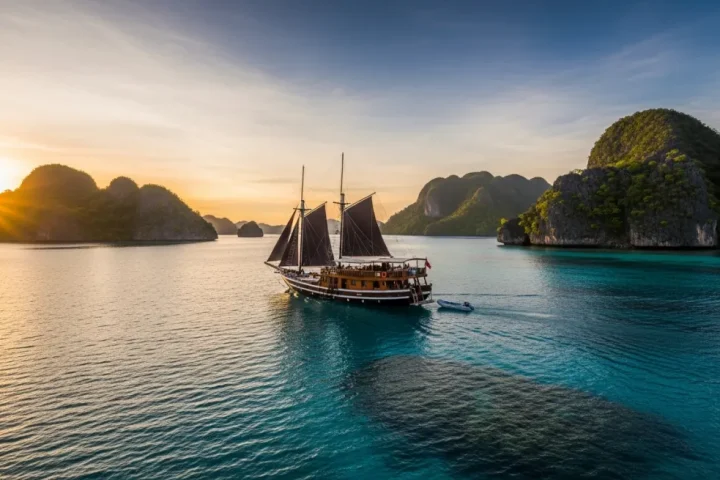
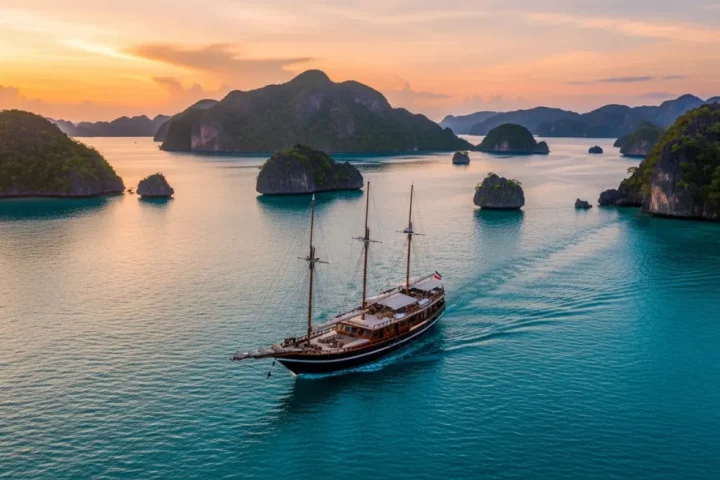
Short answer: Most Raja Ampat liveaboards work the archipelago from October to April or May and reposition elsewhere in Indonesia between June and September, when seas are at their roughest. Water stays at 27–30 °C all year, so the variable is not temperature — it is sea state, wind and how far north or south your itinerary can safely go. December to February is peak for Dampier Strait mantas; Misool holds a longer manta window, roughly September to June.
Does Raja Ampat have a dry season?
Not in the way most tropical destinations do. Raja Ampat sits close to the equator and rains to some degree in every month. A shower here is usually a passing squall — heavy, brief, and over before you have finished drying the camera.
What actually drives the season is wind and swell. The mid-year months bring the roughest conditions, which is why the liveaboard fleet largely leaves. Nothing about the reef gets worse in July; the crossing to Wayag simply becomes unpleasant, and the crossings are the whole business of a liveaboard.
What does each month look like?
| Month | Sea state | Rain | Manta odds | Crowd level | Our verdict |
|---|---|---|---|---|---|
| January | Generally workable | Frequent squalls | Peak — Dampier | High | Prime manta month; book far ahead |
| February | Generally workable | Frequent squalls | Peak — Dampier | High | Same — the classic window |
| March | Settling | Moderate | Strong | High | Excellent all-round month |
| April | Often the calmest of the season | Moderate | Good, tailing off in the strait | Moderate | Our quiet favourite — calm north crossings |
| May | Season closing | Moderate | Fair; Misool still working | Lower | Shoulder value; fleet starting to move |
| June | Roughening | Moderate | Misool window continues | Low | Most boats repositioning; limited choice |
| July | Roughest period | Moderate | Limited | Low | Off-season here; the fleet is elsewhere |
| August | Roughest period | Moderate | Limited | Low | Off-season; year-round budget boats only |
| September | Improving | Moderate | Misool window opens | Low | Early shoulder — south-focused itineraries |
| October | Season opening | Moderate | Building | Rising | Good value as the fleet returns |
| November | Workable | Increasing | Dampier season starts | High | Strong month; mantas arriving |
| December | Generally workable | Frequent squalls | Peak begins | Very high | Festive premium; book 9–12 months out |
Treat that as a planning map, not a forecast. Raja Ampat’s weather is local and fickle: a squall can sit over Wayag while the Dampier Strait is glassy, and a month that behaved one way in 2026 can behave differently in 2027.
Why does the same month feel different in Misool and Wayag?
Because they are at opposite ends of a large archipelago with different exposure. Wayag, in the far north, is a 4–6 hour crossing each way by fast boat from the central islands, over open water. When the wind is up, that crossing is the first thing an itinerary sacrifices — which is why every northern programme we run carries a substitution clause, as explained in our Wayag guide.
Misool, roughly ten to twelve hours south of Sorong, is a different weather system again, and its manta season at Magic Mountain runs longer — approximately September to June — against the Dampier Strait’s November to April. In practice this means a September or June trip should look south, and a January trip has the full menu. The comparison is set out in our piece on Manta Sandy versus Magic Mountain.
What is the water like, and what should you wear?
Water is 27–30 °C year-round. That sounds like board-shorts territory, and for a single dive it is. For a week of three to four dives a day it is not — repetitive immersion makes people much colder than the thermometer suggests, particularly on the third and fourth day.
A 3 mm full suit suits most divers; a shorty or a 5 mm are the two ends of the sensible range depending on how you run. Snorkellers should wear a long-sleeved rash guard for sun rather than warmth. A thin windproof layer is worth having for night decks and dawn tenders, which are the two situations where guests are consistently underdressed. The rest of the kit list is in our 2027 packing list.
Does visibility change by month?
Somewhat, and less than people expect. Raja Ampat’s water is nutrient-rich by design — that is why the fish are there — so visibility is generally good rather than gin-clear, and can drop after heavy rain or on a strong plankton bloom.
A bloom is a mixed blessing worth understanding: reduced visibility often coincides with better manta activity, because the plankton is what brings them to the cleaning stations. Divers who complain about a hazy day at Manta Sandy are sometimes complaining about the reason they saw eight mantas.
Which month should you book?
- Mantas above all: December to February in the Dampier Strait, accepting peak pricing and crowds.
- Best all-round conditions: March and April — the sea usually settles, northern crossings open up, and the fleet is still in place.
- Best value: October and May, at the edges of the season.
- Misool-focused: September through June works; the south is not tied to the narrow Dampier manta window.
- Avoid: July and August for a dedicated Raja Ampat liveaboard. The boats are elsewhere for good reason.
A six-night itinerary in a settled month covers the central archipelago comfortably — see the 6D5N phinisi package. If your dates fall in a shoulder month and you still want both ends of the archipelago, length is what buys you weather margin: the 11-night grand voyage can lose two days to wind and still deliver the trip.
Frequently asked questions
When is the best time to visit Raja Ampat?
October to April/May for liveaboards, with December to February the peak manta window in the Dampier Strait.
Is Raja Ampat closed in July and August?
No — but most liveaboards reposition elsewhere in Indonesia, so choice narrows sharply and crossings are rougher.
Will rain ruin my trip?
Rarely. Squalls are brief and you are wet anyway. Wind and swell affect an itinerary far more than rainfall.
How rough do the overnight passages get?
Variable. Anchored in a sheltered bay a phinisi is very stable; crossing open water in a building sea it is not. Take seasickness medication before you feel unwell.
What water temperature should I expect?
27–30 °C all year. Dress for repetition, not for cold.
How far ahead should I book a peak-season week?
Nine to twelve months for December–February on a good vessel. Shoulder months are far more forgiving.
Matching your dates to a route
Tell us the weeks you can actually travel and we will tell you honestly which route those dates favour — north, south or central — rather than selling you the itinerary you first asked about. Charters here are operated by Komodo Luxury, part of Juara Holding Group, sailing Indonesian waters since 2015. WhatsApp +62 811 3823 875 or email [email protected].