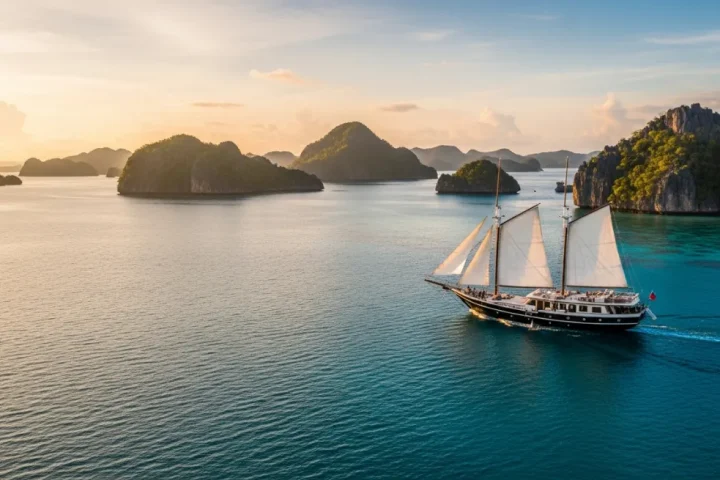
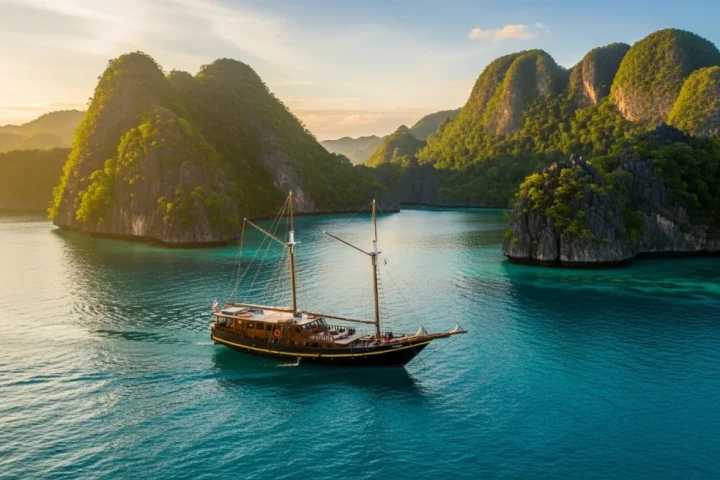
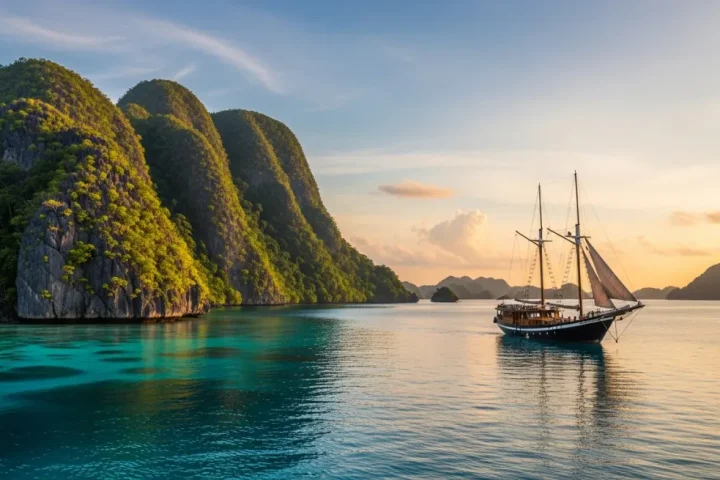
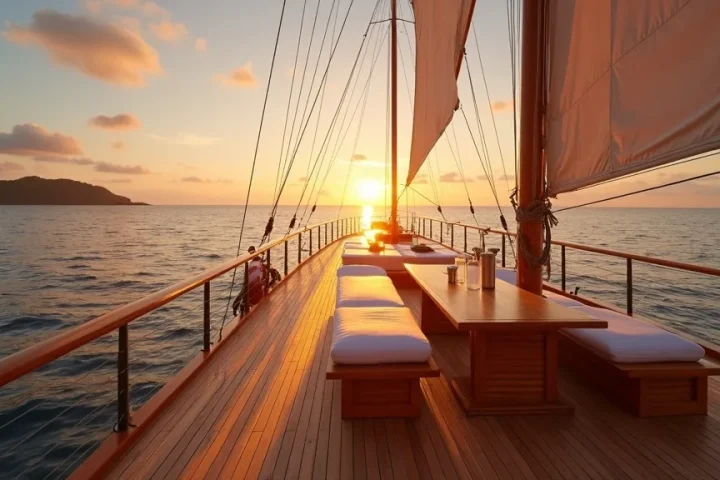
Short answer: A properly built Raja Ampat phinisi gives every diver a numbered station with their own tank position, box and hanging space; runs one or two tenders so divers enter from a small boat rather than off the mother ship; and offers nitrox, usually at surcharge. Vessels here typically run 22–40 metres for 8–14 guests (ultra-luxury to 18) in 4–7 cabins. The dive deck is where the difference between a good boat and a cheap one becomes obvious, and it takes about ten minutes on board to see it.
What does a good dive deck actually give you?
Space that is yours for the week. A numbered station means your tank stays in one place, your BCD hangs in the same spot, your fins live under the same bench, and nothing gets shuffled between dives. On a boat doing three to four dives a day for seven days, that is not a nicety — it is the difference between a calm deck and a scrum.
Beyond the station itself, the things worth checking are unromantic: a dedicated camera table away from foot traffic, separate rinse tanks for cameras and for masks (a mask in a camera tank scratches dome ports), enough freshwater pressure to rinse gear properly, charging points that are not shared with the bar, and shade over the whole deck so kit is not baking between dives.
| Feature | Budget boat | Mid-range phinisi | Luxury phinisi |
|---|---|---|---|
| Guests | 12–16, shared cabins common | 8–14 in 4–7 cabins | 8–18, en-suite throughout |
| Dive stations | Shared bench, informal | Numbered, one per diver | Numbered with personal box and hanging space |
| Tenders | One, often doubling as transport | One to two | Two, allowing parallel dive and snorkel groups |
| Nitrox | Sometimes unavailable | Usually available at surcharge | Available; sometimes included in premium rates |
| Camera facilities | Shared rinse bucket | Dedicated table and rinse tank | Table, dedicated tank, charging bank, workspace |
| Cabins | Fan or shared bathroom possible | En-suite, individually controlled aircon | En-suite, aircon, more deck space per guest |
| Guide ratio | Larger groups per guide | Small groups | Small groups, plus a separate snorkel guide |
Why do tenders matter more than the mother ship?
Because of current. Raja Ampat’s best sites — Blue Magic, Sardine Reef, Cape Kri on a running tide — are dived with a negative entry at a precise point, and a 30-metre wooden vessel cannot manoeuvre to that point repeatedly without disturbing the site.
A tender can. It drops you exactly where the guide wants you, follows your bubbles, and picks you up wherever the drift ends. Two tenders let a boat run divers and snorkellers in parallel on completely different plans, which on a mixed-interest charter transforms the week for the non-divers.
A giant stride off the main deck into a two-knot current, by contrast, is how divers miss the pinnacle entirely. The technique behind all of this is covered in our Dampier Strait current diving briefing.
Is nitrox available, and should you take it?
Usually available, usually at surcharge. Whether to take it depends on the shape of your week rather than on any general principle.
A seven-night liveaboard typically delivers 18–25+ dives across 12–18 sites at three to four dives a day. Most of those dives sit in the 10–40 m band, with the richest life shallow at 10–20 m. That is exactly the repetitive-profile pattern where nitrox buys you longer no-decompression limits and, for many divers, noticeably less fatigue by day four.
If you are certified, take it. If you are not, Raja Ampat is a reasonable place to add the qualification, but do it before you arrive rather than eating into dive time on board. Either way, get the surcharge itemised in your quotation at booking — along with rental gear and alcohol, it is one of the standard extras outside a cruise fare.
How does the deck run through a day?
Four water sessions is the working maximum, and the deck routine is what makes it sustainable: brief, kit up at your station, tender out, dive, tender back, hand your kit up, and let the crew reset your tank while you eat.
The crew doing the resetting is a real part of what you pay for. On a well-crewed phinisi you do not carry your own tank, you do not fill your own cylinder, and you do not fight anyone for rinse water. That labour is invisible until you have been on a boat without it, at which point four dives a day stops being enjoyable.
A caveat worth stating: dive counts are targets, not entitlements. Guides call sites off for tide, sea state and group readiness, and a day with three dives instead of four is usually the sign of a crew reading conditions properly. The full rhythm is built into our 8D7N phinisi package.
What should underwater photographers look for?
Specifics, and they are easy to ask about before booking:
- A dedicated camera table with a padded, dry surface, out of the walkway.
- A camera-only rinse tank — separate from mask and fin rinse.
- Charging capacity for multiple batteries and a laptop, and honesty about generator hours overnight.
- Tender space for handing a rig down rather than jumping with it.
- Group size, because six divers in front of you at a pygmy seahorse is a photographic problem no lens solves.
For anyone shooting seriously or freediving, the deck configuration matters even more than the itinerary — which is the whole premise of our freediving and photography charter.
What about safety equipment on the deck?
Ask directly, and expect a direct answer: oxygen on board and crew trained to deliver it, a stocked first-aid kit, satellite communications independent of guest wifi, a working tender radio, and a documented plan for getting an injured guest to definitive care.
Raja Ampat is genuinely remote. The nearest chamber is not around the corner, and that reality should shape both the boat’s equipment and your own dive profiles. We set out what a policy needs to cover in our insurance and evacuation checklist.
Frequently asked questions
How many dives per day on a Raja Ampat liveaboard?
Three to four, including night dives, subject to conditions — roughly 18–25+ over a seven-night week.
Is nitrox included?
Usually a surcharge. Get it itemised in your quote rather than assuming either way.
Can I rent equipment on board?
Yes on most vessels, at surcharge. Bring your own mask, computer and regulators if you have them; rent the bulky items.
How big are Raja Ampat phinisi?
Typically 22–40 m carrying 8–14 guests in 4–7 cabins, with ultra-luxury vessels taking up to 18.
Do I need my own reef hook?
Most boats lend them. Bring your own if you prefer a familiar line length — you will use it.
Are there hot showers on the dive deck?
On mid-range and up, generally yes, though fresh water is made or carried and long showers are noticed.
Choosing the boat, not just the route
Ask us for the deck layout, tender count, guide ratio and nitrox arrangement of any vessel you are considering — those four answers tell you more about your week than the itinerary map does. Charters here are operated by Komodo Luxury, part of Juara Holding Group, sailing Indonesian waters since 2015. WhatsApp +62 811 3823 875 or email [email protected].