Short answer: In 2012 the ichthyologist Dr Gerald R. Allen recorded 374 reef fish species on a single 90-minute dive at Cape Kri, on the eastern tip of Kri Island in the Dampier Strait — the most-cited single-dive fish diversity count in the world. The site is normally dived between about 5 and 25 metres, with variable and often strong drift. It is not a difficult dive to enjoy; it is a demanding dive to do badly.
What is the Cape Kri record and why does it matter?
Dr Gerald R. Allen has spent a career counting reef fish. His single-dive tally at Cape Kri — 374 species in ninety minutes — became the benchmark against which reef biodiversity is now casually measured, and it did more than any brochure ever could to put Raja Ampat on the map for divers.
The number is worth understanding rather than repeating. It is a species count by a specialist who could identify a juvenile wrasse at a glance, on a single dive, at one site. It is not a promise of what you will see. What it tells you is structural: this specific stretch of reef concentrates an extraordinary density of species in a small area, and there is a reason for that.
Why is there so much life on one small point?
Three things stack up at Cape Kri.
Position. Raja Ampat sits at the heart of the Coral Triangle. The archipelago holds more than 550 reef-building coral species — roughly three-quarters of all known species — and more than 1,500 reef fish species across some 1,500 islands, cays and shoals. The baseline is already the richest on earth.
Current. The Dampier Strait is a channel between large landmasses, and water is forced through it. Current delivers plankton; plankton feeds fusiliers and anthias; those feed jacks, tuna and sharks. Fish density here is a by-product of moving water, which is exactly why the strait is not a gentle place to dive.
Structure. A cape at the end of an island splits the flow. That produces upcurrent walls, downcurrent eddies and a shallow ridge, and each of those micro-habitats holds a different set of species — which is how a single dive can accumulate a number like 374.
How does Cape Kri actually dive?
Most dives run between roughly 5 and 25 metres, with deeper options along the drop. Water is 27–30 °C year-round, and the richest life sits in the top 10–20 metres — which is convenient, because that is also where the light is.
The current is variable and often strong. In practice that means a negative entry timed by the guide, a drift along the reef, and reef-hook territory on the point when you want to stop and watch. Guides here read the tide, not the clock, and a good one will move the dive or call it entirely rather than put a group into the wrong stage of a flood. The technique and etiquette of diving this strait are covered properly in our Dampier Strait current diving briefing.
| Species group | Typical sighting at Cape Kri | Depth band |
|---|---|---|
| Fusiliers, anthias, damselfish | Constant, in walls of thousands | 5–20 m |
| Giant trevally and other jacks | Common, hunting into the schools | 10–25 m |
| Snapper and surgeonfish | Dense aggregations on the point | 10–25 m |
| Blacktip and whitetip reef sharks | Regular, patrolling the drop | 15–30 m |
| Dogtooth tuna | Passing, in the blue | 20–30 m |
| Barracuda | Schooling, current-dependent | 10–25 m |
| Hard and soft coral, sea fans | Continuous cover along the slope | 5–30 m |
What will you realistically see in one dive?
Not 374 species — and anyone who tells you otherwise is selling something. What you will see is a wall of fish dense enough that you lose the reef behind it, trevally cutting through fusilier schools at speed, and reef sharks working the edge of the drop. Most divers surface from Cape Kri talking about volume rather than variety, because the variety is only visible to someone who can name what they are looking at.
That is the honest framing we would rather give you: Cape Kri is not a checklist site. It is the dive where you understand what an unfished, current-fed reef looks like when it is functioning properly.
Do you need to be an experienced diver?
You need to be a competent one. Buoyancy control, comfort with a negative entry, and the discipline to stay with a guide matter more than a logbook number. Divers who are current-shy do enjoy Cape Kri when the tide is right — the point is that the tide has to be right, and that is the guide’s call, not yours.
If your certification is recent, build up on gentler Dampier sites first. Mioskon, at the southern entrance to Kabui Bay, maxes out around 24 metres with mild to moderate current and makes an excellent check-out dive. A week’s itinerary should ramp you into the strait rather than throw you at its hardest point on day one.
Across a seven-night cruise you should expect 18–25+ dives across 12–18 sites at three to four dives a day, which is more than enough exposure to build genuine confidence in current. Our 8D7N phinisi package is built around exactly that progression.
How do you get to Cape Kri?
It sits in the Dampier Strait, thirty to sixty minutes from Waisai by speedboat and directly on the route of every central Raja Ampat itinerary. Nearly all liveaboards dive it, which is also its one drawback: at peak season the site can hold several boats’ worth of divers.
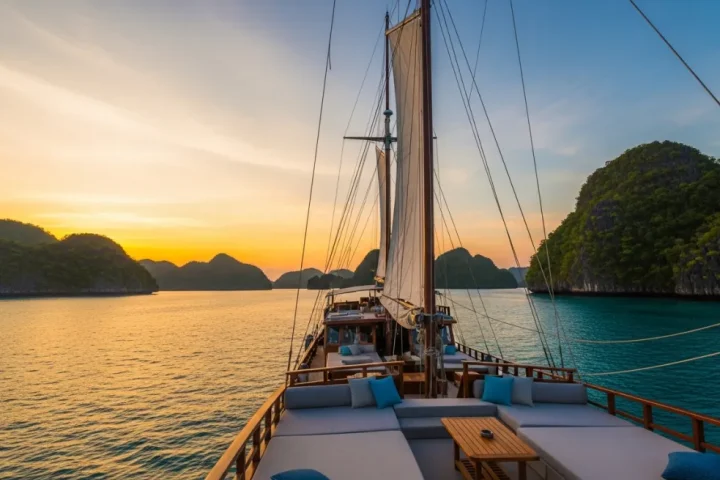
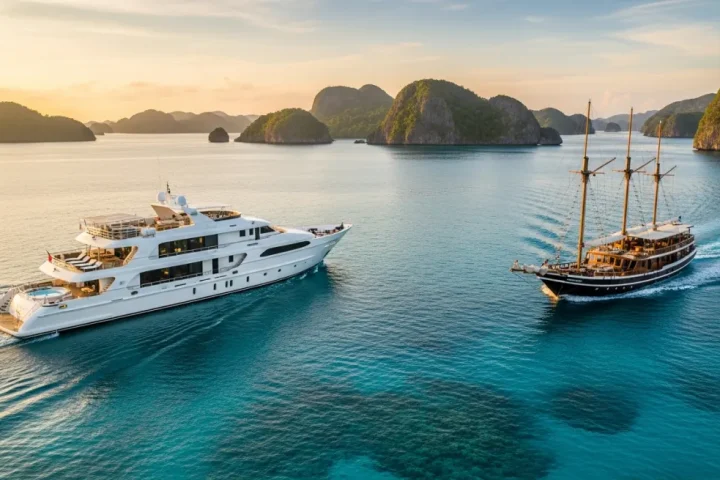
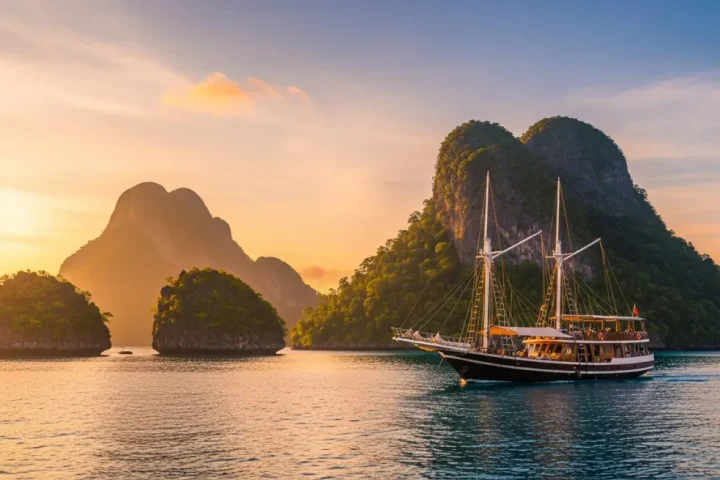
The counter is timing rather than avoidance. A phinisi anchored nearby can put you in at first light before the day boats arrive from Waisai, and can dive the point on the tide stage that suits it instead of the one that suits a schedule. That flexibility is most of the argument for sleeping on the water, and it is built into the Dampier Strait phinisi cruise.
Whatever the tide is doing, the conduct rules apply: no touching, no gloves, no chasing, no feeding. On a reef this heavily visited those rules are the difference between a record-holding site and a former one — see our summary of Raja Ampat’s rules for visitors.
Frequently asked questions
Who set the Cape Kri record and when?
Dr Gerald R. Allen, in 2012, logging 374 reef fish species during a single 90-minute dive.
Is Cape Kri suitable for snorkelling?
Only in the right conditions and with a guide watching the current. The shallow reef top is spectacular, but this is not a place to drift alone off a beach.
How deep is Cape Kri?
Most of the dive runs 5–25 m, with deeper profiles available along the drop. The richest life is shallow.
Do I need a reef hook?
It helps enormously on the point. Hook into dead substrate or rubble only — never into living coral.
What is the best season?
The main liveaboard season runs roughly October to April/May, when most boats work Raja Ampat before repositioning between June and September.
Will I see mantas at Cape Kri?
Not typically — this is a schooling-fish and predator site. For mantas you want Manta Sandy or Blue Magic in the strait, or Magic Mountain down in Misool.
Diving Cape Kri from your own boat
If Cape Kri is on your list, the question worth asking is not whether an itinerary includes it — almost all do — but whether the vessel can dive it on your tide and at your hour. Charters here are operated by Komodo Luxury, part of Juara Holding Group and an Indonesian phinisi operator since 2015. Send your dates and certification levels to WhatsApp +62 811 3823 875 or [email protected] and we will build the dive plan around them.