Short answer: Arborek is a small Papuan village on a tiny island in the Dampier Strait, and its wooden jetty is one of the easiest world-class snorkel and photo sites in Indonesia — batfish, sweetlips and trevally circling the pilings from the surface down to about 15–20 metres, in mild current. Everyone stops here because it is close to the classic dive sites, genuinely beautiful, and accessible to swimmers who will never put on a tank.
Where is Arborek and why does every itinerary stop there?
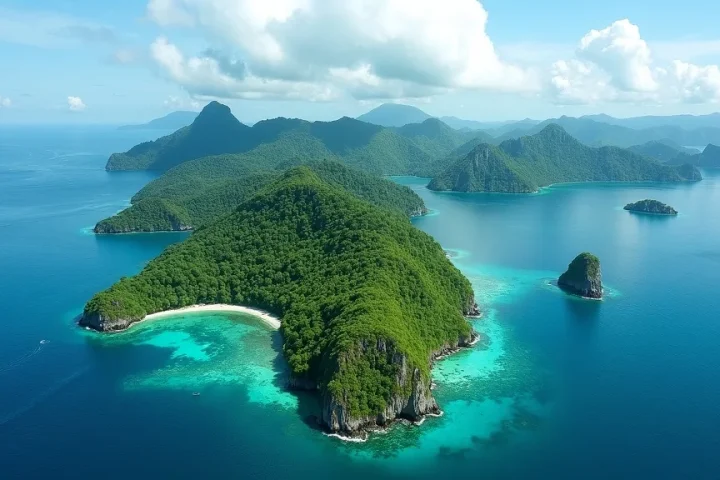
Arborek sits in the middle of the Dampier Strait, minutes from Manta Sandy and within easy reach of Kri, Mansuar and the rest of the central sites. From Waisai it is a short speedboat run; from a phinisi at anchor it is a tender ride.
Geography explains the stop, but it does not explain why people remember it. Arborek is a genuinely inhabited village of a few hundred people with homestays, a school, handicrafts and a football-sized clearing — not a staged cultural display. It is one of the very few places on a Raja Ampat itinerary where you step off the water into somebody’s daily life, and it is worth treating with the care that implies.
What is the jetty dive and snorkel like?
Structurally simple and visually extraordinary. Wooden pilings drop from the surface to a sandy bottom, coral has colonised them, and fish use the shade the way fish always use a pier — in numbers, and predictably.
Depth runs from the surface to roughly 15–20 metres, current is usually mild, and the best of it is shallow. That combination makes Arborek the rare site where a snorkeller sees essentially what a diver sees. Batfish hang under the structure and are curious enough to approach; sweetlips shelter in the shade; trevally cut through. Around the pilings there is macro life for anyone who slows down.
It is also the best jetty photography in Raja Ampat: shooting upward through the pilings into the surface light is the classic frame, and it works on a compact camera in a housing as well as on a rig worth more than the boat’s tender.
| Activity | Typical time | Cost expectation |
|---|---|---|
| Jetty snorkel | 45–90 minutes | Included on a charter |
| Jetty dive | 50–60 minutes | Included on a dive itinerary |
| Village walk | 30–60 minutes | Village contribution, normally handled by the boat |
| Buying handicrafts (woven hats, bags) | As long as you like | Small amounts of cash — bring small rupiah notes |
| Photography of the jetty from above | Golden hour | Free; ask before including people |
What is the etiquette for visiting the village?
Straightforward, and it matters more here than anywhere else on a typical itinerary because you are walking between people’s houses.
- Cover up ashore. Swimwear is for the water. Put on a shirt and shorts or a sarong before you step onto the jetty.
- Ask before photographing people, particularly children, and accept a no. A camera pointed at a stranger’s doorway is the same rudeness anywhere in the world.
- Buy the handicrafts. Woven hats and bags are made here and the money stays here. Bring small-denomination rupiah — there is no card machine and there is no ATM.
- Do not hand out sweets or money to children. It creates exactly the dynamic that makes later visitors unwelcome. If you want to give, ask your guide about the school.
- No single-use plastic. The regency restricts it and the village enforces it. Bring a refillable bottle and carry your rubbish back to the boat.
- Ask before flying a drone. Over a village, always. Frequently the answer will be no.
These norms are part of a wider set of rules that make Raja Ampat function — sanctuary status, no-touch diving, plastic restrictions — laid out in our guide to Raja Ampat’s rules for visitors in 2027.
Why does the community angle matter to a charter guest?
Because Raja Ampat’s conservation model is not a fence around an empty reef. It is a network of agreements with the communities who own these waters, funded partly by the conservation fee you pay and partly by visitors buying hats, staying in homestays and hiring village guides.
Arborek is one of the clearest examples of that working: a small island whose reef is in good condition partly because the people living on it have a direct stake in it staying that way. Spending an hour and a modest amount of cash ashore is not charity. It is the mechanism.
How does Arborek fit into a week?
Usually as a change of pace. A morning of current diving at Cape Kri or Sardine Reef, then an afternoon at Arborek where nobody needs a reef hook and everyone — divers, snorkellers, children, grandparents — is in the same water looking at the same batfish.
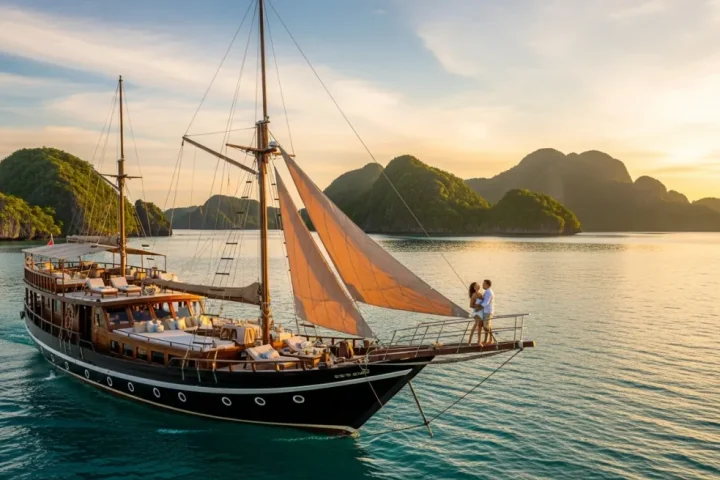
That inclusiveness is why it appears on nearly every itinerary we run, and why it anchors trips designed for mixed groups. It is a fixture on the Dampier Strait phinisi cruise and on the non-diver snorkelling cruise, where it is one of the sites that proves you do not need a tank to see the best of Raja Ampat.
Pair it with a dawn start at Gam for birds of paradise and you have a day that has almost nothing to do with diving and is frequently the one guests talk about afterwards — see our Sawinggrai trek guide.
When is the best time to be there?
Early morning or late afternoon for the light, and any time for the fish. The jetty’s shade means the batfish are there through the day, but shooting up through the pilings works best when the sun is not directly overhead.
Seasonally, Arborek follows the general Raja Ampat pattern: the main liveaboard season runs roughly October to April/May, with most boats repositioning between June and September. Water sits at 27–30 °C year-round, so exposure protection is about repetitive immersion rather than cold.
Frequently asked questions
Can non-swimmers enjoy Arborek?
Yes — the village walk and the view from the jetty stand on their own. In the water, a buoyancy vest makes the shallow reef accessible to weak swimmers.
How deep is the Arborek jetty dive?
Surface to around 15–20 m, with the best of it shallow.
Is there a fee to visit the village?
A small local contribution is standard and is normally handled by the boat. Bring cash for handicrafts separately.
Can I stay in an Arborek homestay?
Yes — the village has homestays and they are a completely different, and much more basic, way of seeing Raja Ampat than a phinisi.
What should I buy?
The woven hats and bags Arborek is known for. Pay the asking price; it is already modest.
Is the current strong at the jetty?
Usually mild, which is exactly why it suits snorkellers — unlike the strait’s seamounts a few minutes away.
Building a Dampier Strait week
Arborek is close to everything, which makes it easy to include and easy to include badly — at midday, for twenty minutes, with a queue at the jetty. Ask us to time it properly. Charters here are operated by Komodo Luxury, part of Juara Holding Group and an Indonesian phinisi operator since 2015. WhatsApp +62 811 3823 875 or email [email protected].