- **October – April:** Peak dry season, minimal rainfall, ideal for diving and snorkeling.
- **May & September:** Shoulder months offer fewer crowds and unique transitional weather.
- **June – August:** Southeast monsoon, best explored in specific regions like Wayag for privacy.
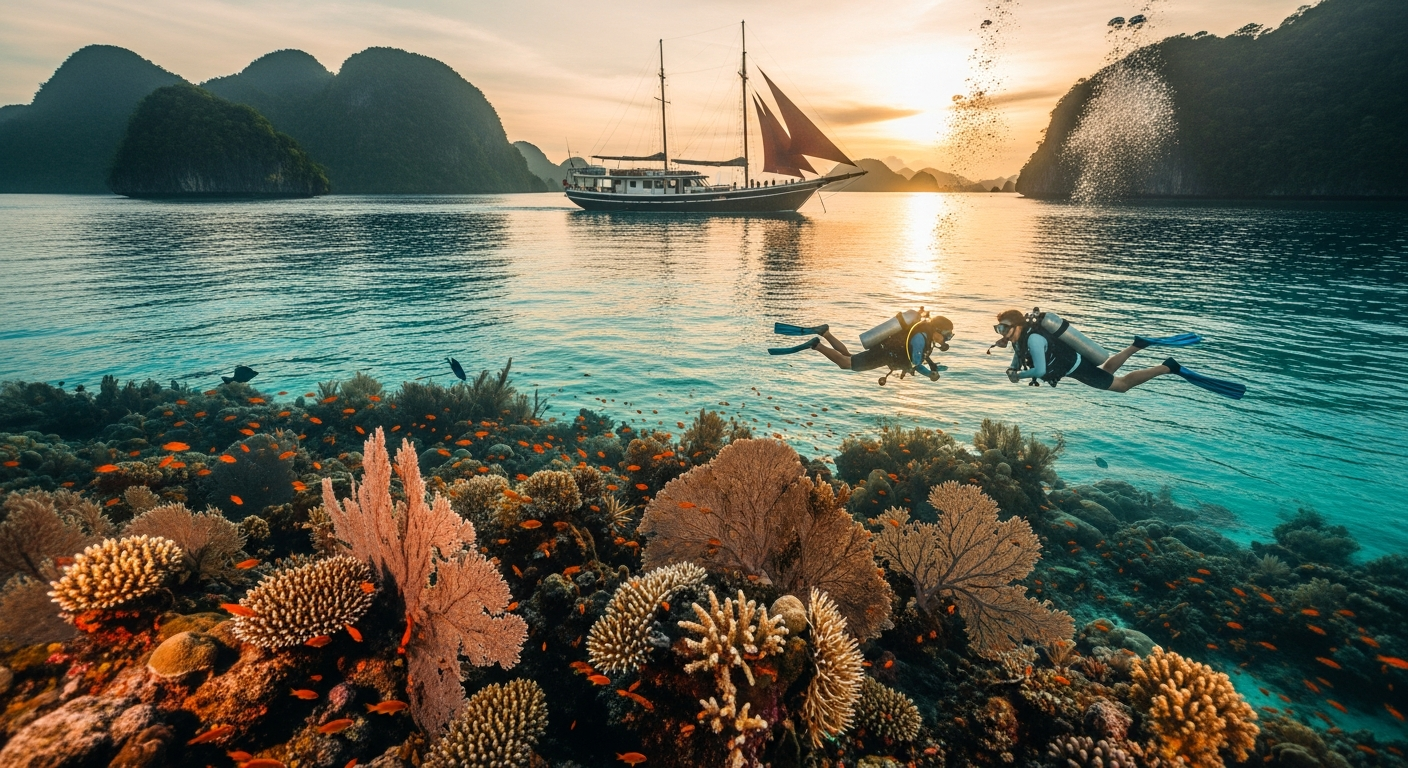
The dawn breaks over an expanse of turquoise, a gentle swell rocking the handcrafted teak deck. A warm breeze carries the scent of salt and distant jungle. This is Raja Ampat, a realm of unparalleled marine biodiversity, a destination where timing elevates an exceptional journey to an extraordinary expedition aboard a private phinisi.
The Dry Season Zenith: October to April
The period from October to April represents the apex for a Raja Ampat phinisi charter. During these months, the prevailing northwest monsoon recedes, ushering in a season of placid seas and skies of brilliant blue. Water temperatures consistently hover between 28-30°C (82-86°F), creating ideal conditions for extended dive sessions and snorkeling excursions. Visibility often extends beyond 25 meters, providing unobstructed views of the Coral Triangle’s vibrant ecosystems.
This window aligns with the peak activity of pelagic species within the Dampier Strait. Manta rays, both oceanic and reef varieties, congregate at cleaning stations such as Manta Ridge and Manta Sandy. Divers frequently encounter these magnificent creatures with wingspans exceeding 5 meters. The biodiversity here is globally significant; a 2012 Reef Life Survey at Cape Kri documented 374 fish species on a single dive, a world record. A private phinisi charter during this time allows for strategic positioning, ensuring optimal access to these ephemeral encounters.
The southern reaches around Misool also experience their finest conditions. The soft coral gardens, renowned for their kaleidoscopic hues, are at their most vibrant, bathed in consistent sunlight. Dive sites like Magic Mountain and Boo Windows reveal flourishing hard coral formations and pygmy seahorses clinging to gorgonian fans. Phinisi vessels, often 40-meter traditional Indonesian yachts, navigate these waters with ease, offering access to remote lagoons and seldom-visited reefs. A 10-day itinerary during this period offers ample time to explore both northern and southern highlights, covering significant distances across the archipelago, which spans over 50,000 square kilometers.
Booking a luxury phinisi for this prime season typically requires a 12-18 month lead time, especially for vessels accommodating 10-14 guests in 5-7 opulent cabins. This ensures availability for bespoke itineraries catering to UHNW clients and multi-generational family groups seeking exclusive experiences. The prevailing calm also facilitates smooth tenders operations, crucial for accessing Wayag’s iconic karst lagoons and panoramic viewpoints, a highlight for many discerning travelers. For more insights into the region’s unique geography, consult Wikipedia’s detailed entry on Raja Ampat.
Monsoon Shifts and Transitional Wonders: May and September
The shoulder months of May and September present a compelling alternative for the discerning traveler seeking a Raja Ampat phinisi charter. These periods mark the transition between the prevailing monsoons, often characterized by periods of calm interspersed with localized, brief showers. The significant advantage during these windows is a noticeable reduction in tourist traffic, affording a greater sense of privacy and exclusivity across the archipelago’s myriad islands. Average daily visitor numbers can decrease by up to 30% compared to peak season, enhancing the feeling of a private expedition.
In May, as the northwest monsoon wanes, the waters remain largely tranquil, particularly around the central and northern islands like Waigeo and Gam. Visibility typically maintains excellent levels, often exceeding 20 meters. This period is particularly favorable for exploring the intricate cave systems and mushroom-shaped islets of the Wayag region, where the calm surface conditions are paramount for tender excursions and aerial photography. A 7-day charter during May can focus intensely on these iconic landscapes without the bustle of multiple concurrent vessels.
September ushers in a similar transitional calm as the southeast monsoon prepares to depart. While occasional squalls may occur, they are generally short-lived and localized, rarely impacting an entire day’s activities. The marine life remains abundant, with opportunities for encountering schooling fish and reef sharks in the Dampier Strait. Photographers, in particular, value these months for the unique light conditions and the absence of crowded dive sites. Many luxury phinisi operators, with their experienced Indonesian captains, leverage their intimate knowledge of micro-climates to navigate these conditions adeptly, ensuring optimal guest experience.
These transitional months often coincide with slightly lower charter rates, potentially offering a 10-15% reduction compared to peak season, making a luxury phinisi experience more accessible for those with flexible schedules. The water temperature remains consistently warm, around 29°C (84°F), suitable for all water-based activities. For advanced PADI divers, the slightly more unpredictable conditions can sometimes lead to unique encounters, such as specific fish spawning events that are less common during the absolute calm of the dry season. Consider these months for a truly bespoke and less conventional Raja Ampat exploration.
The “Wet” Season: June to August Reimagined
The period from June to August, traditionally labeled the “wet season,” often deters visitors, yet it offers unique advantages for a private phinisi charter in Raja Ampat. Rather than a continuous deluge, this season is characterized by the southeast monsoon, bringing intermittent, localized showers, often occurring in the late afternoon or overnight. The perception of an entire day lost to rain is largely inaccurate; many days still offer hours of sunshine and excellent conditions for diving and snorkeling. The average daily rainfall during this period is typically less than 100mm, concentrated over brief intervals.
One significant benefit during these months is the profound sense of solitude. The reduced visitor numbers mean dive sites and lagoons, particularly in the northern regions, are often exclusively yours. This is especially true for the iconic Wayag area, where the sheltered lagoons and karst formations remain largely unaffected by the prevailing winds. The calm waters within these limestone mazes are perfect for kayaking, stand-up paddleboarding, and drone photography, offering uninterrupted vistas without other tourist boats. A 12-day phinisi itinerary can be meticulously crafted to maximize exploration of these secluded spots.
While the southern Misool region might experience choppier conditions during the peak of the southeast monsoon, an experienced phinisi crew can adapt itineraries, focusing on the more sheltered bays and islands in the north and central areas. Dive sites in the Dampier Strait, though potentially subject to stronger currents, continue to teem with marine life. The slightly cooler surface temperatures, often around 27-28°C (81-82°F), can sometimes stimulate different feeding behaviors among pelagic species. For PADI Advanced Open Water divers with experience in current, these conditions can lead to exhilarating drift dives.
Furthermore, this season can present opportunities for observing specific marine phenomena. For instance, certain species of schooling fish may aggregate in greater numbers. Phinisi charters during June to August often come with more flexible booking options and potentially more attractive rates, sometimes up to 20% lower than peak season. This makes it an ideal choice for corporate retreats or wedding parties seeking an exclusive, undisturbed setting for their event. The lush green landscapes, invigorated by the rain, also offer a different, vibrant aesthetic for those venturing ashore. To understand Indonesia’s broader climate patterns, refer to Indonesia Travel’s climate guide.
Wayag, Misool, and Dampier: Regional Nuances
Raja Ampat is not a monolithic entity; its vastness means different regions exhibit distinct characteristics and optimal visiting periods for a Raja Ampat phinisi charter. Understanding these regional nuances is key to crafting a truly bespoke itinerary that aligns with specific preferences, whether they lean towards iconic landscapes, vibrant soft corals, or adrenaline-fueled drift dives. The archipelago’s area alone, approximately 67,310 square kilometers, hints at its diverse microclimates.
The northern region, dominated by Waigeo and Gam islands, including the iconic Wayag karst formations, generally experiences calmer conditions during the traditional dry season (October to April). The sheltered lagoons of Wayag, with their emerald waters and towering limestone islets, are best explored when surface conditions are placid, allowing for easy tender transfers and stunning aerial views from the viewpoints, which require a 20-30 minute climb. During the southeast monsoon (June to August), while the open sea can be choppier, the inner Wayag lagoons often remain protected, offering a serene experience for those willing to brave a potentially rougher journey to reach them.
Conversely, Misool, located in the southern part of Raja Ampat, thrives during the dry season, specifically from October to April. This period brings the calmest seas and best visibility, allowing full exploration of its renowned soft coral gardens, vibrant reef systems, and unique dive sites like Boo Windows and Magic Mountain. Misool’s distinctive mushroom-shaped islands and ancient rock art sites are also more accessible. During the southeast monsoon, Misool can experience stronger winds and larger swells, making some exposed dive sites challenging, though sheltered bays still offer excellent diving. Many luxury phinisi yachts are equipped with advanced stabilization systems to enhance comfort during these periods.
The Dampier Strait, situated between Waigeo and Batanta, is a year-round diving hotspot due to its nutrient-rich currents, which attract large schools of fish and pelagics like manta rays. However, the period from October to April sees consistently strong currents, which are ideal for drift diving and encountering the highest concentrations of marine life at sites like Cape Kri and Sardine Reef. Even during the “wet season,” the Dampier Strait remains productive, though currents might be slightly less predictable. A typical 7-day phinisi itinerary often allocates 3-4 days to this prolific region, capitalizing on its dynamic ecosystems. The strategic positioning of a private phinisi allows for optimal timing of dives based on tidal charts, maximizing encounters with the 1,700 documented fish species.
Mastering the Currents and Tides
Navigating Raja Ampat’s underwater realm is an art, particularly when considering the dynamic interplay of currents and tides. For a Raja Ampat phinisi charter, understanding these forces is paramount to unlocking the archipelago’s full potential, especially for advanced PADI divers. The region’s position within the Coral Triangle, where the Pacific and Indian Oceans converge, creates a complex system of currents that dictate marine life behavior and dive conditions. This intricate dance of water is a core element of the insider experience.
The primary currents in Raja Ampat are driven by the Indonesian Throughflow (ITF), a massive oceanic current transporting water from the Pacific to the Indian Ocean. This flow is influenced by the moon’s phases, creating predictable tidal patterns. Spring tides, occurring during full and new moons, generate the strongest currents, often reaching speeds of 2-3 knots at specific choke points like the Dampier Strait. Neap tides, during quarter moons, bring calmer conditions. Experienced phinisi captains and dive guides meticulously study these tidal charts, often planning dives around slack tide or anticipating the direction of the current for exhilarating drift dives.
During the peak dry season (October to April), currents in the Dampier Strait are generally consistent and strong, bringing nutrient-rich waters that attract large aggregations of fish, including barracudas, jacks, and reef sharks. This predictability allows for precise dive planning, maximizing encounters with pelagic species at sites like Blue Magic and Mike’s Point. For advanced divers, the challenge of navigating these currents is part of the allure, offering unparalleled opportunities for witnessing the sheer abundance of marine life. Nitrox certification is often recommended for extended bottom times during these current-rich dives, enhancing safety and enjoyment.
In the southern Misool region, currents are typically less intense than in the Dampier Strait, but still vital for the health of its soft coral gardens. Phinisi crews leverage knowledge of local eddies and protected bays to ensure comfortable diving, even during periods of stronger open-ocean currents. The sheltered nature of many Misool dive sites, such as Nudi Rock and Whale Rock, allows for exploration regardless of the prevailing tidal flow outside. For underwater photographers, understanding current patterns is crucial for positioning and stability, ensuring crisp images of the 76% of the world’s coral species found here. A luxury phinisi provides the ultimate platform for this precise planning, with dedicated dive tenders and expert guides offering detailed briefings before each descent.
Planning Your Bespoke Phinisi Journey
Embarking on a Raja Ampat phinisi charter is an exercise in bespoke luxury, requiring meticulous planning to perfectly align with your preferences and the archipelago’s unique rhythms. This is not merely a booking; it is the curation of a private expedition, tailored to the specific desires of UHNW clients, advanced divers, and multi-generational family groups. The process begins long before boarding, often 12-24 months out, to secure the ideal vessel and itinerary.
The first step involves defining your primary objectives. Are you prioritizing specific dive sites like Misool’s Magic Mountain, the manta rays of Dampier Strait, or the iconic landscapes of Wayag? Your answer will significantly influence the optimal timing and duration of your charter. A dedicated dive-focused trip might leverage the consistent currents of the dry season (October-April) with a 10-day itinerary, allowing for multiple dives daily, including night dives. For families with mixed interests, a 7-day charter during the shoulder months (May or September) might balance water activities with island excursions, kayaking, and relaxation on board a 35-meter teak schooner.
Vessel selection is paramount. The Raja Ampat phinisi fleet comprises a range of luxury yachts, each with distinct cabin configurations, amenities, and crew specializations. Some phinisi are designed with state-of-the-art dive centers, offering PADI certifications up to Divemaster, while others feature expansive sundecks and gourmet chefs catering to specific dietary requirements. Discussing the number of guests, desired cabin types (e.g., master suite, twin cabins), and specific onboard services (e.g., massage therapists, dedicated photographers) with your charter specialist is crucial. These vessels, built by Buginese and Konjo shipwrights using techniques passed down through centuries and recognized by UNESCO in 2017, represent the pinnacle of traditional craftsmanship and modern comfort.
Finally, consider the logistics. Flights into Sorong (SOQ) airport, often via Jakarta (CGK) or Makassar (UPG), require careful scheduling. Transfers to Waisai, the gateway to Raja Ampat, typically involve a 2-hour ferry ride or private speedboat for a seamless transition to your phinisi. Visa requirements for Indonesia should be checked well in advance. Our team provides comprehensive support for all these elements, ensuring every detail, from advanced PADI course arrangements to specific vintage wine selections, is handled with discretion and precision. This holistic approach ensures your private Raja Ampat phinisi journey is as flawless as the pristine waters you will explore. For further information on Indonesia’s tourism, visit Indonesia.Travel.
The intricate dance of seasons and currents in Raja Ampat offers a spectrum of experiences, each tailored to the discerning traveler. Whether you seek the vibrant peak of the dry season or the serene exclusivity of the shoulder months, a private phinisi charter provides the ultimate platform for exploration. To begin crafting your bespoke journey through this unparalleled marine wonderland, explore our Raja Ampat phinisi fleet and charter options today.